Fastest Growing Cities in the US in 2026: Latest Census Data
The fastest growing cities in the US are not necessarily the places adding the most people. In the latest Census estimates, Celina, Texas grew 24.6% in a single year, while Charlotte, North Carolina added more residents than any other city. The difference comes down to scale.
For this 2026 ranking, we use the U.S. Census Bureau’s Vintage 2025 city and town population estimates, released May 14, 2026. The primary ranking covers incorporated places that had at least 20,000 residents on July 1, 2024 and measures population change through July 1, 2025.
That threshold matters. A small town can post an enormous percentage increase after adding only a few thousand people, while a large city can add tens of thousands and still grow at a modest rate. Keeping the universe consistent makes the comparison more useful.
For broader economic context on population change, migration, housing demand, supply and development, explore Housing Economy, Migration & Development.
The 15 Fastest-Growing Cities and Towns in 2026
| Rank | City / Town | State | Population Growth | 2025 Population |
|---|---|---|---|---|
| 1 | Celina | Texas | 24.6% | 64,427 |
| 2 | Fulshear | Texas | 21.0% | 64,630 |
| 3 | Princeton | Texas | 18.1% | 43,524 |
| 4 | Melissa | Texas | 14.5% | 29,969 |
| 5 | Anna | Texas | 10.2% | 35,245 |
| 6 | Haines City | Florida | 10.0% | 45,973 |
| 7 | Waukee | Iowa | 9.3% | 34,890 |
| 8 | Forney | Texas | 8.5% | 41,658 |
| 9 | Eagle Mountain | Utah | 8.5% | 66,557 |
| 10 | Johnstown | Colorado | 8.4% | 22,433 |
| 11 | Kuna | Idaho | 8.4% | 31,525 |
| 12 | Queen Creek | Arizona | 8.2% | 89,770 |
| 13 | Hutto | Texas | 7.9% | 46,048 |
| 14 | Foley | Alabama | 7.8% | 30,354 |
| 15 | Greenville | Texas | 7.5% | 37,069 |
Source: U.S. Census Bureau Vintage 2025 city and town population estimates. The table ranks incorporated places with populations of at least 20,000 as of July 1, 2024 by percentage population increase from July 1, 2024 to July 1, 2025.
The Definition Changes the Answer
Calling a place the “fastest-growing city” sounds straightforward until you decide what counts as growth.
There are at least three different questions people may be asking:
- Which city grew fastest by percentage?
- Which city added the most residents?
- Which metro area attracted the most population or migration?
Those are not interchangeable.
Celina leads the Census percentage-growth ranking because its population rose 24.6% in one year, reaching 64,427. Charlotte, by contrast, added 20,731 residents, more than any other city, but its much larger starting population means the percentage change was far smaller.
Metropolitan areas introduce another layer. A metro can grow because of population gains in outer suburbs and exurbs even when its central city grows slowly. That is one reason our U.S. Cities & Metro Areas research treats city and metro geography as separate analytical levels.
Texas Leads the Growth-Rate List
The first five places in the Census ranking are all in Texas: Celina, Fulshear, Princeton, Melissa, and Anna.
Texas also claims eight of the top 15 positions overall.
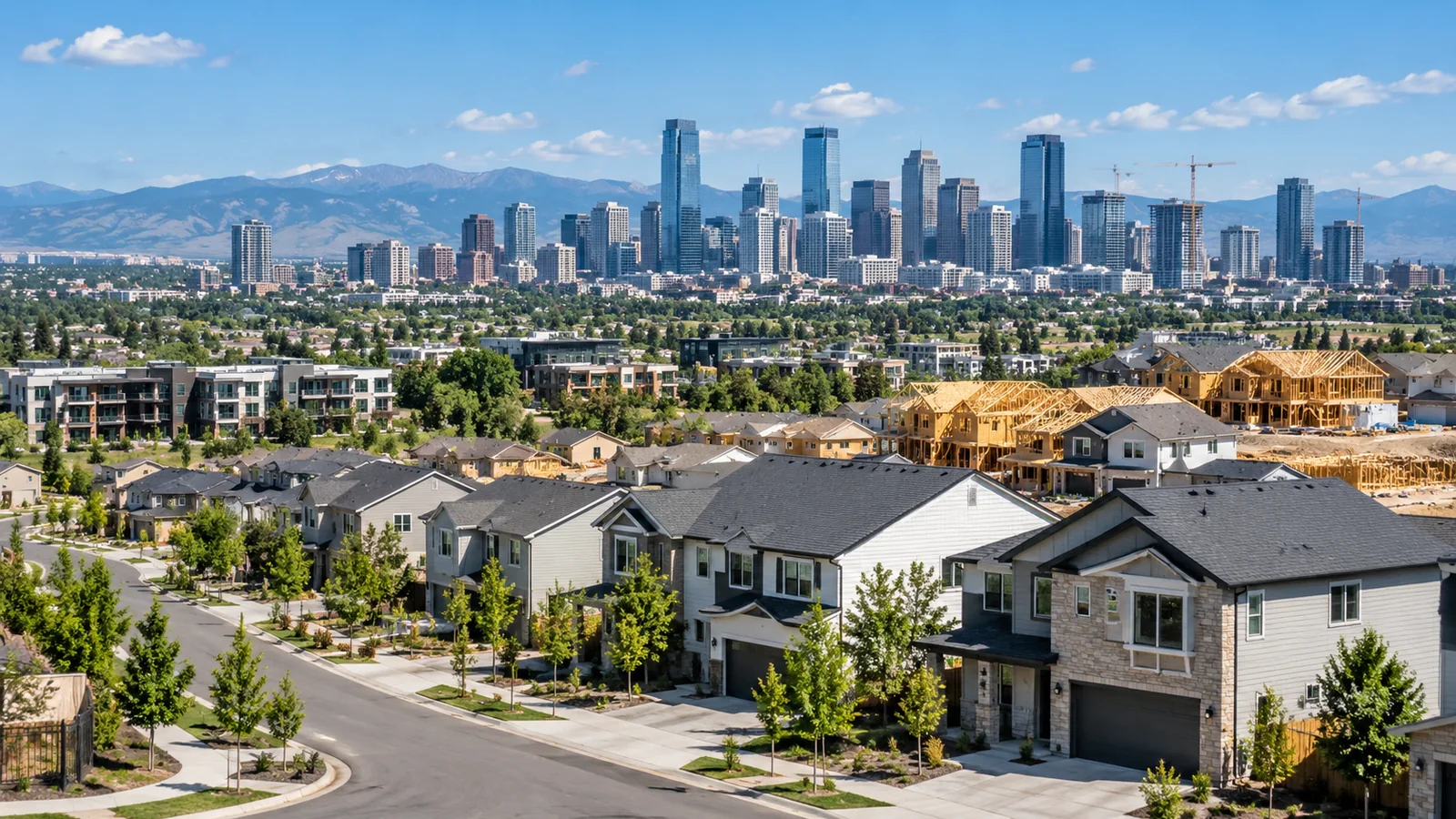
The pattern is geographically concentrated. Four of the top five are in the Dallas-Fort Worth-Arlington orbit, while Fulshear sits outside Houston. The Census Bureau’s analysis of growth on the outer edges of major metro areas describes a broader pattern in which many of the strongest population gains since 2020 have occurred farther from major city centers.
Celina is the clearest example. Census estimates put its 2025 population at 64,427, up 24.6% in one year. Over the longer period from 2020 to 2025, Census says Celina’s population increased by 276.8%.
That kind of growth is easier to achieve in a smaller municipality than in a city of several hundred thousand people, but it still represents significant pressure on housing, roads, schools, utilities, and local services.
The Texas concentration also reflects a larger Southern pattern. Census reports that the South contains 10 of the nation’s 15 fastest-growing cities and 11 of the 12 largest numeric gains.
Growth Is Spilling Beyond the Biggest City Centers
The latest estimates reinforce a pattern that is easy to miss when city rankings focus only on large urban cores.
Census found that even when major cities continued to gain residents, nearby midsized cities often grew faster by percentage.
Charlotte illustrates the difference. It gained 20,731 residents, the largest numeric increase in the country, but Census says it was only the seventh-fastest-growing city within its own metro area by percentage. Fort Mill, South Carolina, about 20 miles from downtown Charlotte, grew 6.8% to 38,673 residents and ranked 20th nationally.
This does not mean central cities are losing relevance. It means the geography of growth can shift outward as households, builders, and employers expand into places where land and new housing may be easier to add.
For housing-market analysis, the distinction matters. Rapid suburban and exurban population growth can create demand for new construction, transportation capacity, schools, retail, and local infrastructure even when the core city grows more slowly.
The Cities That Added the Most People
A different list emerges when we rank cities by raw population gain.
| Rank | City | State | Residents Added | 2025 Population |
|---|---|---|---|---|
| 1 | Charlotte | North Carolina | +20,731 | 964,784 |
| 2 | Fort Worth | Texas | +19,512 | 1,028,117 |
| 3 | San Antonio | Texas | +14,359 | 1,548,422 |
| 4 | Celina | Texas | +12,710 | 64,427 |
| 5 | Seattle | Washington | +11,572 | 784,777 |
| 6 | Houston | Texas | +11,515 | 2,397,315 |
| 7 | Fulshear | Texas | +11,196 | 64,630 |
| 8 | Nashville-Davidson | Tennessee | +9,244 | 721,074 |
| 9 | Port St. Lucie | Florida | +9,131 | 268,062 |
| 10 | McKinney | Texas | +8,504 | 236,001 |
| 11 | Atlanta | Georgia | +8,350 | 529,110 |
| 12 | Jacksonville | Florida | +8,319 | 1,017,689 |
| 13 | Surprise | Arizona | +7,702 | 175,304 |
| 14 | Columbus | Ohio | +7,696 | 938,396 |
| 15 | Goodyear | Arizona | +7,690 | 125,359 |
Source: U.S. Census Bureau Vintage 2025 city and town population estimates. The table covers places with populations of at least 20,000 as of July 1, 2024. For Nashville-Davidson, Census reports the “balance” of the consolidated metropolitan government, excluding semi-independent incorporated places within its boundaries.
Charlotte leads this list, followed by Fort Worth and San Antonio.
Celina and Fulshear are unusual because they appear near the top on both measures. Celina ranks first by percentage growth and fourth by people added, while Fulshear ranks second by percentage and seventh by people added.
Large cities show the opposite pattern. Houston added 11,515 residents and Seattle added 11,572, placing both in the top seven for numeric gains. Neither appears in the top 15 by percentage growth because their starting populations are much larger.
This is why a useful city-growth article needs both measures. Percentage growth captures speed. Numeric growth captures scale.
Midsized Cities Held Up Better as Growth Slowed
The 2024-to-2025 period was not a universally strong year for city growth.
Census says average population growth slowed across cities of all sizes and every region, but the steepest declines were among the largest cities. Midsized cities remained closer to their prior-year growth patterns.
The slowdown was visible even in the South, which continued to lead the country in average city and town growth.
At the same time, several major population thresholds were crossed. Austin became one of 12 U.S. cities with at least 1 million residents, while Raleigh moved above 500,000.
Those milestones show that big cities are still gaining population in important parts of the country. The more interesting shift is that many outer-ring municipalities are growing faster in percentage terms.
City Growth Is Not the Same as Metro Growth
A city is a legal place with defined municipal boundaries. A metropolitan area is a broader labor and commuting market that can include dozens of cities, towns, suburbs, and unincorporated areas.
That difference can change a ranking dramatically.
Fort Worth added 19,512 residents and reached 1,028,117 people in 2025, but Dallas-Fort Worth’s broader growth story includes fast-growing places such as Celina, Princeton, Melissa, Anna, Forney, and other communities on the metro fringe.
A reader comparing relocation markets should therefore avoid assuming that a city ranking describes the entire metro.
For the corresponding metro-level comparison, see our Fastest Growing Metro Areas in 2026 ranking.
For county-level population change, see our Fastest Growing Counties in the U.S. in 2026 ranking.
Our 10 Fast-Growing Affordable Metros in the U.S. for 2026 analysis uses metro-level geography and adds affordability to the comparison. It answers a different question from this Census city ranking.
Population Growth Is Not the Same as Migration
Population can change through several components: births, deaths, domestic migration, and international migration.
A place can gain population even if domestic migration is weak, and a place attracting movers can still grow slowly if other components offset those gains.
That is why Census population estimates should not be described as a direct migration ranking.
For a broader look at migration patterns, see our U.S. Migration Trends hub. For state-level total population growth, our Fastest-Growing States in 2026 analysis keeps the same distinction between growth rates, people added, and migration.
What Rapid City Growth Can Mean for Housing
Fast population growth can increase the number of households competing for housing, but it does not automatically mean home prices or rents will rise at the same rate.
The housing outcome depends on how quickly supply responds.
Fast-growing cities may have several advantages:
- large areas of developable land;
- active subdivision construction;
- new apartment development;
- expanding road and utility networks;
- zoning that allows outward growth.
But rapid expansion can also create bottlenecks. Infrastructure may lag behind new housing. Commute times can change. Schools and public services may face capacity pressure. New supply can be concentrated in particular price ranges or neighborhoods.
That is especially relevant in outer-suburban cities where population can rise much faster than the core metro.
The U.S. Housing Markets hub provides broader context on housing supply, demand, and market conditions. For research focused specifically on where new housing is being authorized and built, see Housing Supply & Development. Population growth should be treated as one demand-side input, not as a stand-alone housing forecast.
Why the 20,000-Person Threshold Matters
The Census headline ranking does not include every incorporated place in the country.
For the annual fastest-growing list, Census restricts the universe to places with at least 20,000 residents as of July 1, 2024.
Using that threshold makes the results more comparable and keeps very small municipalities from dominating the list simply because a modest numeric increase can produce a very large percentage change.
The ranking should therefore not be read as covering every town in America regardless of size. It covers the fastest-growing incorporated cities and towns within the Census Bureau’s 20,000-plus population threshold.
Methodology
We use the U.S. Census Bureau Vintage 2025 City and Town Population Estimates. Vintage 2025 is the Census Bureau’s most recent completed and consistent city-and-town population vintage available when this article was updated.
The primary ranking measures percentage population change between July 1, 2024 and July 1, 2025 for incorporated places with populations of at least 20,000 on July 1, 2024.
The secondary table ranks cities by numeric population gain over the same one-year period.
We keep the two metrics separate because percentage growth and raw population increase answer different questions.
We also do not substitute metro-area data, ACS estimates, moving-company indexes, or migration measures for the Census place estimates used in the primary tables.
The Census Bureau notes that each new estimate vintage revises the full post-2020 time series. Comparisons should therefore use values from the same vintage.
Primary data and methodology are available through the Census Bureau’s city and town population tables and its May 2026 release.
For broader standards on ranking construction, data periods, geographic comparability and methodological limitations, see Data & Ranking Methodology.
Questions About the Fastest Growing Cities in the US
What is the fastest-growing city in the U.S. in 2026?
Celina, Texas ranks first in the latest Census annual estimates among incorporated places with at least 20,000 residents at the start of the period. Its population increased 24.6% from July 1, 2024 to July 1, 2025.
Which U.S. city added the most people?
Charlotte, North Carolina added the most residents, gaining 20,731 people and reaching an estimated population of 964,784.
Why are so many of the fastest-growing cities in Texas?
Texas has several rapidly expanding outer-suburban cities around major metros, especially Dallas-Fort Worth. The state’s fast-growing places also sit within a broader Southern growth pattern documented by the Census Bureau.
Are these the fastest-growing metro areas?
No. These are incorporated cities and towns. Metropolitan areas use broader geographic boundaries and can produce a different ranking.
Does population growth mean people are moving there from other states?
Not necessarily. Total population growth can reflect births, deaths, domestic migration, and international migration.
A Fast-Growing City Can Be Small or Huge
Celina and Charlotte tell the story from opposite ends of the scale.
Celina grew fastest by percentage. Charlotte added the most people. Fort Worth and San Antonio added tens of thousands while smaller Texas cities posted much larger percentage increases.
The useful question is therefore not simply “Which city is growing?” It is “Growing by which measure, within what geography, and from what starting size?”
For readers who want to compare population growth with housing affordability at the broader metro level, continue with our 10 Fast-Growing Affordable Metros in the U.S. for 2026 analysis.